
Financial Sector Working Group Sets Reform Priorities Ahead of 2026 Lao Business Forum



The Lao Business Forum’s Financial Sector Working Group (FSWG) has outlined urgent reform priorities to strengthen Lao PDR’s financial system and prepare consolidated recommendations for presentation to the Prime Minister at the 2026 Lao Business Forum.
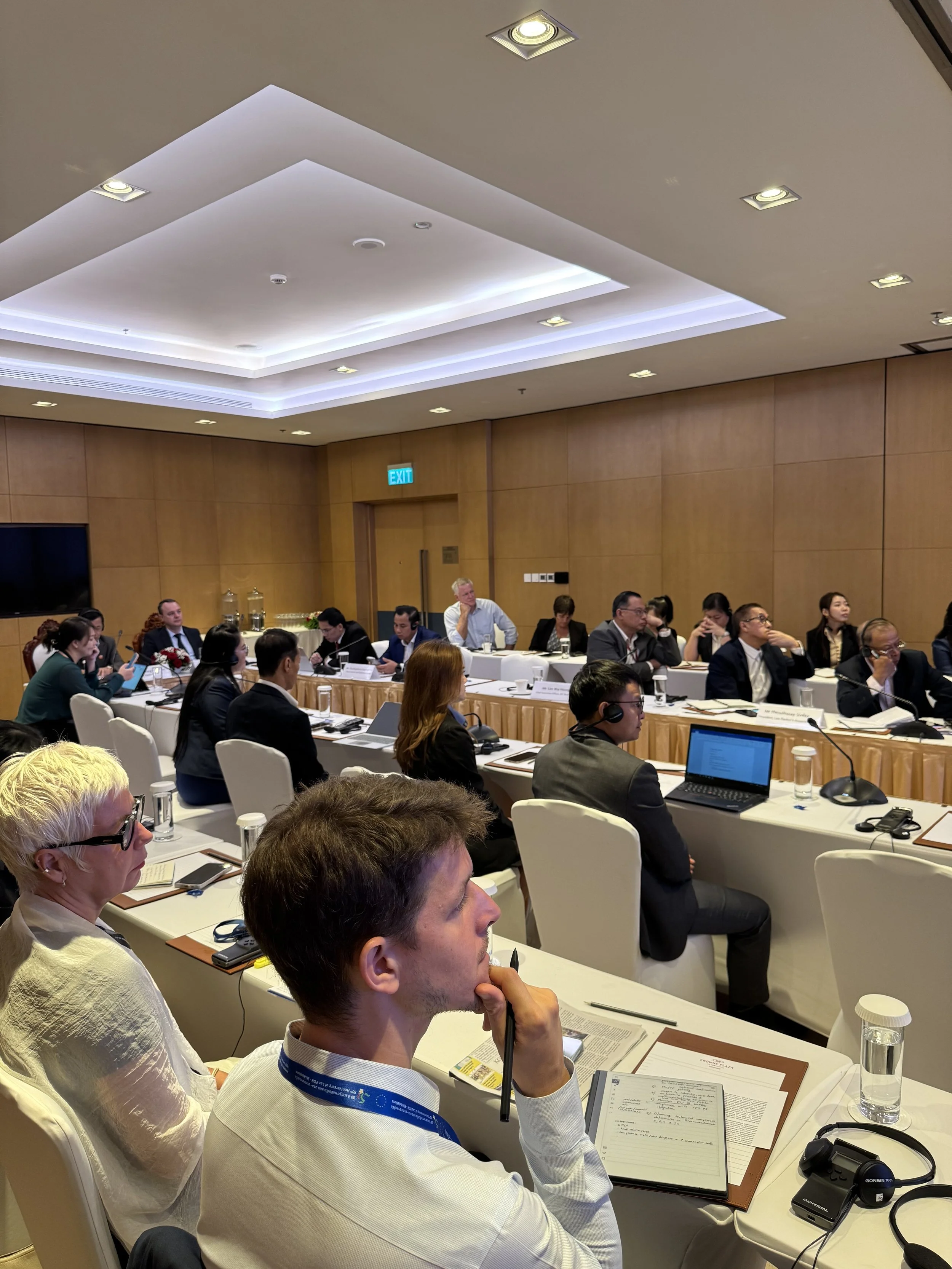
The meeting was held on 9 September 2025 at the Crown Plaza Hotel in Vientiane and was co-chaired by Mr. Michael De Clercq, Vice President of the European Chamber of Commerce and CEO of Banque Franco-Lao (BFL), and Mr. Vanthong Sithikoun, Vice President of the Lao National Chamber of Commerce and Industry (LNCCI) and Head of the Lao Business Forum Secretariat. More than 40 representatives attended, including banks, insurance and leasing companies, microfinance institutions, the Lao Bankers’ Association, foreign chambers of commerce, and financial experts.
This first meeting of the FSWG under the chairmanship of EuroCham Laos reflects the Chamber’s leadership in driving dialogue on financial sector reforms within the Lao Business Forum. The event was convened with the valued support of the Delegation of the European Union to the Lao PDR, underscoring the importance of public–private collaboration in shaping a stronger financial sector.
In his opening remarks, Mr. De Clercq emphasized the importance of building a modern, competitive, and resilient financial and economic environment for Lao PDR. He encouraged participants to focus on sector-wide challenges and to propose solutions that can be implemented in partnership with government authorities. Mr. Sithikoun reminded participants of the formal mandate of the Lao Business Forum, established under the Prime Minister’s Decision No. 04/PM in January 2024, to serve as the main platform for public–private dialogue. He explained that the Forum’s goal is to create a better environment for businesses by removing barriers, improving transparency, and fostering fair competition.
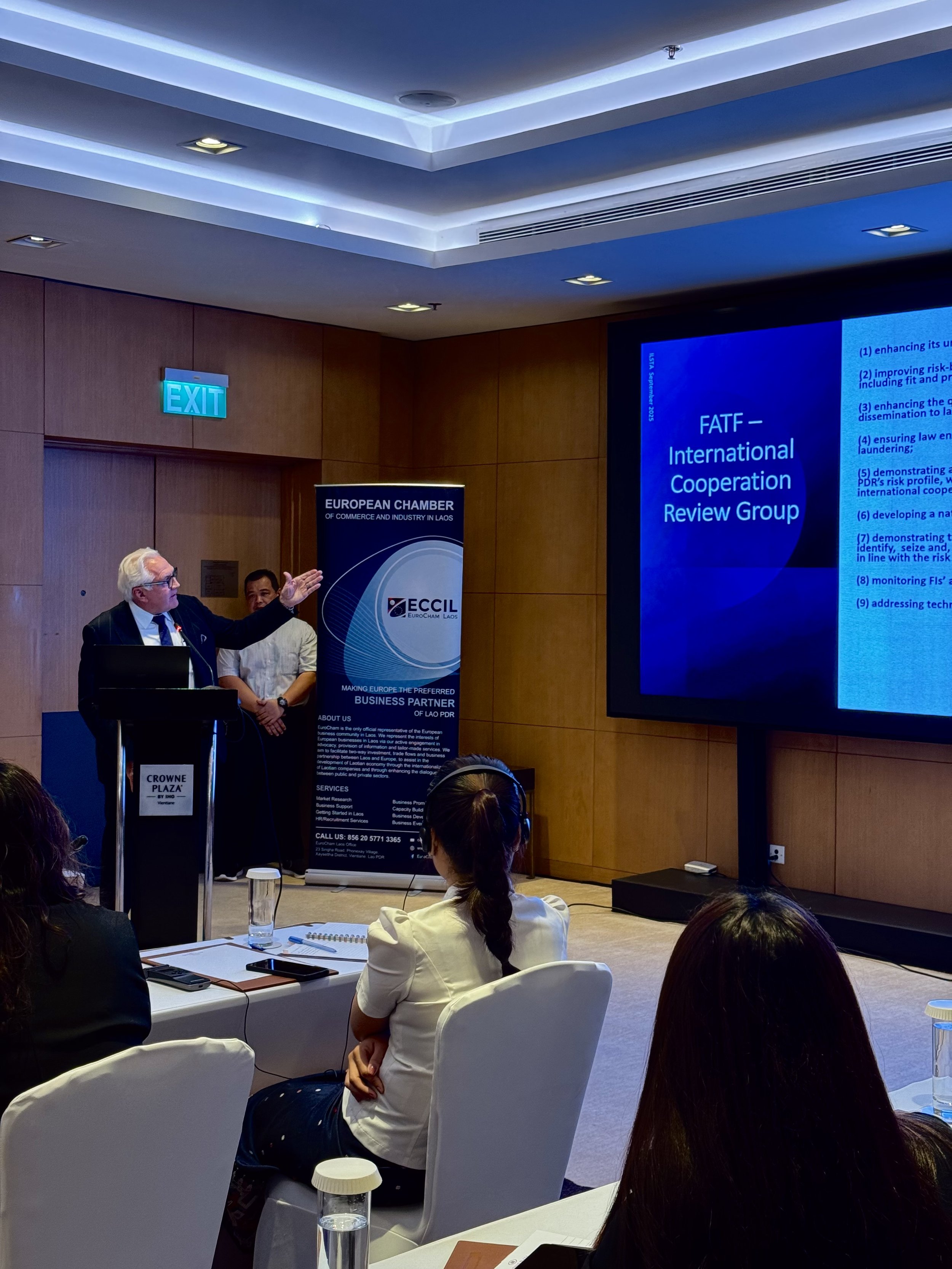
One of the main items on the agenda was a technical presentation from the Institute for Legal Support and Technical Assistance (ILSTA) on the implications of Lao PDR being placed on the Financial Action Task Force (FATF) grey list. The experts explained that the government has committed to an action plan to strengthen anti-money laundering and counter-terrorist financing measures, but warned that grey-listing carries serious consequences such as higher transaction costs, reduced investor confidence, and potential loss of correspondent banking relationships. They stressed that both government and private sector cooperation will be required to address the FATF recommendations in a timely manner.
Participants also shared perspectives on challenges faced by the financial sector. Representatives from banks raised concerns about restrictions on foreign currency management, lengthy legal proceedings for debt recovery that sometimes last several years, and inconsistent enforcement of regulations, which they said creates an uneven playing field. Insurance industry representatives highlighted the cost impact of compulsory conversion of premiums into Lao Kip and suggested introducing credit insurance linked to all loans. The Lao Bankers’ Association called for modernization of registration and notarization procedures through the introduction of legally recognized digital signatures. Other participants pointed to the need for simpler procedures for government-supported SME loan programs, reduced administrative burdens related to non-performing loan revaluations, and measures to address exchange rate volatility.
Speaking on behalf of the private sector, Ms. Bernadette Shaw, Country Head of ANZ Bank Laos, stated: “Predictability is critical for financial institutions. Clear timelines and consistent enforcement of regulations will help create a more level playing field and build investor confidence.”
At the conclusion of discussions, the Working Group voted to identify five key priorities for further advocacy. These include raising awareness and accelerating compliance with FATF requirements, strengthening the management of foreign currency transactions, reserves, and trade finance, addressing lengthy legal proceedings that delay debt recovery, promoting digital transformation through the use of digital signatures and electronic systems, and advancing financial inclusion so that rural populations and small businesses can access financial services more easily.
“These five issues reflect our most pressing challenges,” said Mr. De Clercq. “Addressing them will help improve the credibility, transparency, and resilience of Lao PDR’s financial sector.”
The next meeting of the Financial Sector Working Group will take place in the fourth quarter of 2025 with participation from the Bank of the Lao PDR and other relevant agencies. A third meeting, which will also include development finance institutions, is planned ahead of the 2026 Lao Business Forum.
In closing the meeting, Mr. Sithikoun reaffirmed the commitment of the Lao Business Forum Secretariat to ensure that the priorities identified by the private sector are presented clearly to government authorities. “The Lao Business Forum is about partnership,” he said. “By working together, we can ensure that reforms are realistic, actionable, and beneficial to both businesses and the wider economy.”
About the Lao Business Forum (LBF):
The Lao Business Forum, established under Prime Minister’s Decision No. 04/PM, is the country’s institutionalized platform for structured public–private dialogue. Its mission is to address regulatory barriers, improve transparency, and support sustainable economic development by creating a more enabling business environment.